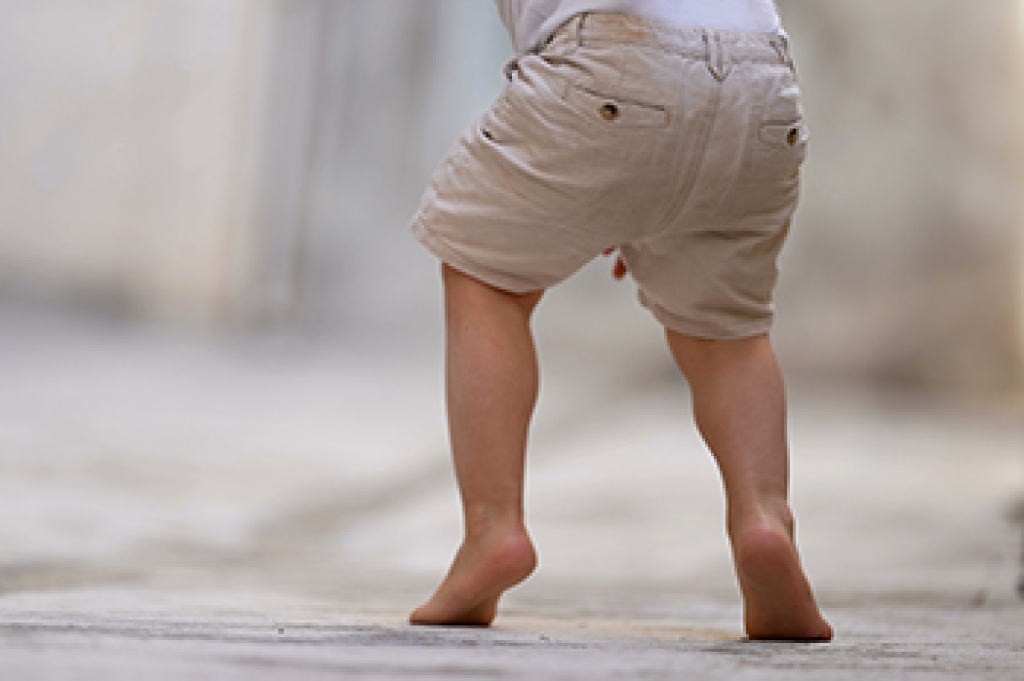
Children who walk on the balls of their feet without letting their heels touch the ground are toe walking. This pattern frequently appears when toddlers first learn to walk. Most children begin using a heel-to-toe pattern by the age of two. Persistent toe walking beyond this age warrants discussion with a podiatrist, especially when the child cannot stand with both heels down. Some children walk flat-footed when asked, but return to their toes afterward. Others have tight calf muscles that limit ankle movement. A podiatrist evaluates these differences to determine whether the pattern reflects a habit or an underlying problem.
Toe walking does not always have an identifiable cause. Doctors call this idiopathic toe walking, meaning that an examination has not revealed another explanation. A short or tight Achilles tendon sometimes prevents the heel from reaching the floor. This strong band connects the calf muscles to the heel bone. Less frequently, conditions affecting muscle control or nerves contribute to the walking pattern. Toe walking also occurs more frequently in children with autism, but toe walking alone does not establish that diagnosis. Walking on only one foot or suddenly starting after previously walking normally requires prompt medical evaluation.
A podiatrist begins by asking when toe walking started and how frequently it occurs. The examination includes watching the child walk and checking whether the heels reach the floor. The podiatrist assesses ankle flexibility, muscle strength, and foot alignment. Comparing both legs helps identify differences that warrant further investigation. Parents should report frequent falls, calf discomfort, or difficulty keeping up with other children. The podiatrist also reviews the child's developmental history and any family history of similar walking patterns. If the findings point to a nerve or developmental condition, the podiatrist may prefer to work with the child’s pediatrician or another specialist to plan care.
Treatment depends on the child's age, ankle flexibility, and examination findings. For a young child with flexible ankles, a podiatrist might recommend scheduled examinations to monitor walking and muscle tightness. A prescribed ankle-foot brace supports the foot and encourages heel contact. Serial casting uses a series of casts to gradually stretch tight calf muscles and improve ankle movement. Follow-up visits assess progress and identify recurring tightness. If your child continually walks on their toes, it is suggested that you schedule an appointment with a podiatrist for a diagnosis and appropriate treatment.
The health of a child’s feet is vital to their overall well-being. If you have any questions regarding foot health, contact one of our podiatrists of The Foot Specialists. Our doctors can provide the care you need to keep you pain-free and on your feet.
Tips for Keeping Children's Feet Healthy
- Make sure their shoes fit properly
- Look for any signs of in-toeing or out-toeing
- Check to see if they have Clubfoot (condition that affects your child’s foot and ankle, twisting the heel and toes inward) which is one of the most common nonmajor birth defects.
- Lightly cover your baby’s feet (Tight covers may keep your baby from moving their feet freely, and could prevent normal development)
- Allow your toddler to go shoeless (Shoes can be restricting for a young child’s foot)
- Cut toenails straight across to avoid ingrown toenails
- Keep your child’s foot clean and dry
- Cover cuts and scrapes. Wash any scratches with soap and water and cover them with a bandage until they’ve healed.
If you have any questions, please feel free to contact our offices located in Waltham and Milford, MA . We offer the newest diagnostic and treatment technologies for all your foot care needs.
